Planning an exterior project on Oconomowoc Lake can feel exciting and a bit daunting. You want to improve your home while protecting lake views, trees, and the character that makes this community special. If you are wondering how the Architectural Control Board fits into your plans, you are not alone. In this guide, you will learn what the ACB looks for, how approvals relate to other permits, what to include in your submittal, and how to avoid delays. Let’s dive in.
What the review covers
Who reviews your plans
The Village of Oconomowoc Lake uses an Architectural Control Board to review exterior changes. The ACB looks at design, materials, scale, and how a project fits the neighborhood and lake setting. Village staff and the building inspector help you understand the process and issue building permits after approvals are in place.
Other agencies can be involved too. Waukesha County may review shoreland or floodplain issues. The Wisconsin Department of Natural Resources can be required for work in or near the water. Trade work like electrical, plumbing, and HVAC usually needs separate permits that follow state codes.
How ACB decisions fit with permits
ACB approval is often required before the Village can issue certain building permits. That approval does not replace County or State permits. You may need several approvals running on different timelines. In some cases, the ACB will condition its approval on you getting outside permits first.
When you need approval
Common exterior projects
Projects that often need ACB review include:
- New construction and additions
- Exterior remodels, siding, roofing, and window changes that affect appearance
- Decks, porches, and major hardscape
- Fencing, driveways, and lighting visible from the street or lake
- Mechanical equipment locations that impact views or neighbors
Always confirm with the Village whether your specific project requires review, especially for items like in-kind replacements.
Shoreline and lake work
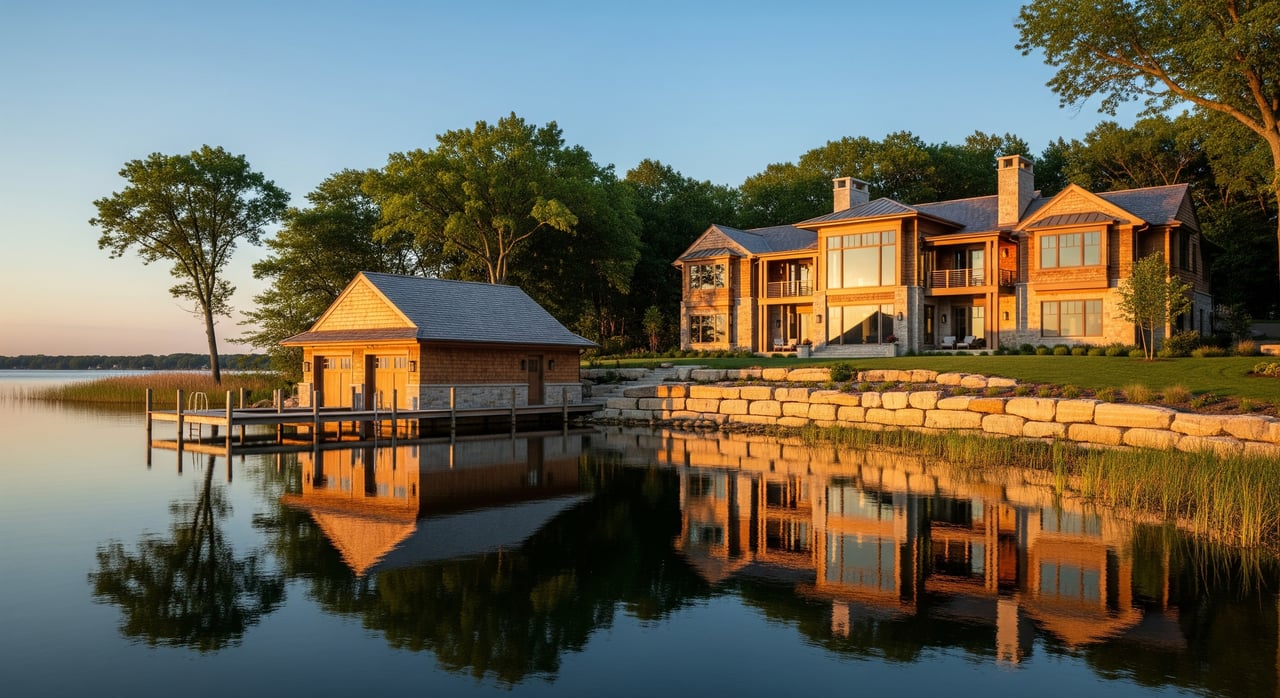
If your plans touch the shoreline or lake, expect more layers. Docks, seawalls, boathouses, retaining walls, and grading near the water can trigger County shoreland rules and DNR permits. The ACB will consider view corridors, materials, erosion control, and how your plan protects the lake environment.
What to include in your packet
Core documents checklist
Provide a clear, complete packet to move smoothly through review. Typical submittals include:
- Completed ACB application form and any required fee
- Scaled site plan showing property lines, existing and proposed structures, setbacks, driveways, walkways, slopes, and trees
- Elevations of all affected sides with dimensions, heights, and materials noted
- Roof plan and any sections for additions or new builds
- Existing conditions photos of the house, street, and neighboring context
- Landscape and tree protection plan, including erosion control measures
- Material samples, color chips, and product information for siding, roofing, windows, railings, fences, and paving
- Lighting plan with fixture types and shielding
- Hardscape details and surface types, including permeable versus impermeable areas
- For shoreline work: plans that show the ordinary high water mark, proposed structures, profiles, and restoration plantings
Technical attachments for larger projects
For bigger or more complex work, you may also need:
- Grading, drainage, and stormwater management plans prepared by a qualified professional
- Structural drawings for additions, large decks, or boathouses
- Tree protection and replacement plan
- Construction staging plan for access, hours, parking, equipment storage, and silt fences
- Evidence of County or DNR consultation or permits, or a statement that you have applied
Submission quality and format
Submit legible, scaled drawings with a north arrow and scale bar. Provide digital PDFs and printed sets if the Village requests them. Label products by manufacturer and color. Include contact information for the owner, architect or designer, and contractor.
Typical conditions to expect
Design, height, and massing
To preserve the lake’s character and neighbors’ sightlines, the ACB may condition approval on:
- Adjusting roof height or stepping back upper floors
- Using materials and colors that align with surrounding homes
- Reducing reflective finishes that produce glare
Landscaping, trees, and lighting
Expect conditions that protect the landscape and the night sky:
- Tree preservation and replacement if removals are necessary
- Planting and screening around mechanical equipment and utilities
- Fully shielded lighting directed downward with modest brightness and color temperature
Shoreline and construction management
For projects near the water or with earthwork, common requirements include:
- Erosion control, silt fencing, and prompt stabilization of disturbed soil
- Native plantings to stabilize shorelines and support habitat
- Clear construction hours, parking plans, and site cleanup standards
Permits and sequencing
Recommended order
For most projects in Oconomowoc Lake, this general sequence helps keep things efficient:
- Schedule a pre-application conversation with Village staff to confirm what you need.
- Identify whether a variance is likely. If so, discuss timing with staff.
- Start County or DNR applications early for shoreline or environmental work.
- Submit a complete ACB packet by the posted deadline.
- Provide proof of outside approvals as requested so the Village can issue building permits.
Estimated timelines
If your packet is complete and your project is straightforward, you may move from ACB review to permit issuance in a matter of weeks. If you need a variance, County or DNR permits, or engineering review, plan for several months. Meeting schedules and cutoffs matter, and incomplete packets often get pushed to the next meeting.
Avoid delays: local best practices
- Start early and request pre-application feedback to surface issues while design options are still flexible.
- Submit a thorough, scaled, and labeled packet. Include photos, material samples, and product info.
- Align the design with neighborhood context, especially for lake-facing elevations.
- Check shoreland and floodplain boundaries and flag any wetland concerns early.
- Address stormwater and grading up front to prevent runoff problems.
- Protect mature trees. If removals are unavoidable, include a clear mitigation plan.
- Communicate with neighbors. Sharing plans and being responsive can reduce objections.
- Work with local professionals who know Oconomowoc Lake expectations and agency practices.
- Respond quickly to any requests for clarification. Be ready to make small design adjustments to meet conditions.
Common pitfalls to avoid
- Submitting incomplete drawings without elevations, materials, or clear dimensions
- Ignoring shoreland setbacks or delaying County or DNR permits
- Removing mature trees without a protection or replacement plan
- Overlooking drainage, which can trigger neighbor complaints and County conditions
- Proposing materials or finishes that strongly contrast with the setting
- Starting work before approvals or permits are in hand
- Assuming ACB approval guarantees a building permit if other approvals are still pending
Planning scenarios
Replacing windows and paint
If you are replacing windows in kind or updating paint, the level of review depends on whether the change alters the exterior appearance. Many ACBs require color chips and product information even for simple updates. Ask the Village whether administrative sign-off is possible for straightforward replacements.
New deck or addition near the lake
An addition or deck close to the shoreline often triggers both ACB review and County shoreland rules. Be ready with a site plan that shows setbacks, grades, and stormwater solutions. If you need a variance for setbacks or lot coverage, coordinate with staff on whether to bring a conceptual design to the ACB first or pursue the variance in parallel.
Dock or shoreline project
Work in or near the water can require DNR permits and County review. Your ACB packet should show the ordinary high water mark, existing and proposed structures, profiles, erosion control, and restoration planting. Native buffers are common conditions, and limits on dock size or location may apply.
If you are denied or need a variance
If the ACB denies your application, you can typically revise your plans and resubmit or pursue the appeal routes allowed by the Village. If your project cannot meet dimensional standards, a variance through the Zoning Board of Appeals may be necessary. Speak with staff early to understand the process and how your design can be improved to meet the village’s goals.
Get local help
You do not have to navigate this alone. A smooth review comes from good plans, clear communication, and local know-how. As a Lake Country specialist with a concierge approach, Kimberly & Co. Realtor LLC can help you think through design fit, connect you with trusted architects and contractors, and coordinate the steps that keep your project moving. Ready to talk through your plan and timeline? Schedule a free consultation with Kimberly & Co. Realtor LLC, affiliated with First Weber.
FAQs
Do I need ACB approval for small exterior changes in Oconomowoc Lake?
- It depends on whether the change affects exterior appearance. Check with the Village to confirm if paint, window replacements, or similar updates need ACB review or can be approved administratively.
How much detail should I provide for paint or replacement windows?
- Plan to submit color chips and product information. Clear photos and elevations help the ACB understand the context and ensure a quicker decision.
Will I be required to plant native vegetation along the shoreline?
- Many shoreline projects include conditions for native plantings to stabilize banks and protect habitat. The exact requirement depends on your site and any County or DNR permits.
What happens if the ACB denies my application in Oconomowoc Lake?
- You can revise your plans and resubmit or pursue appeal options allowed by the Village. Speak with staff to understand the best path forward.
Can I start construction after ACB approval?
- Only after you have all required permits. ACB sign-off does not replace County, DNR, or state trade permits.
Who enforces ACB conditions during construction?
- Village staff and the building or zoning official typically inspect for compliance. Neighbor complaints can also prompt enforcement reviews.